Scar Camouflage: The Treatment Helping People Make Peace With Their Skin
You've tried the oils. The creams. The serum a stranger on the internet swore by. And the scar is still there — so here's what actually works, explained honestly.
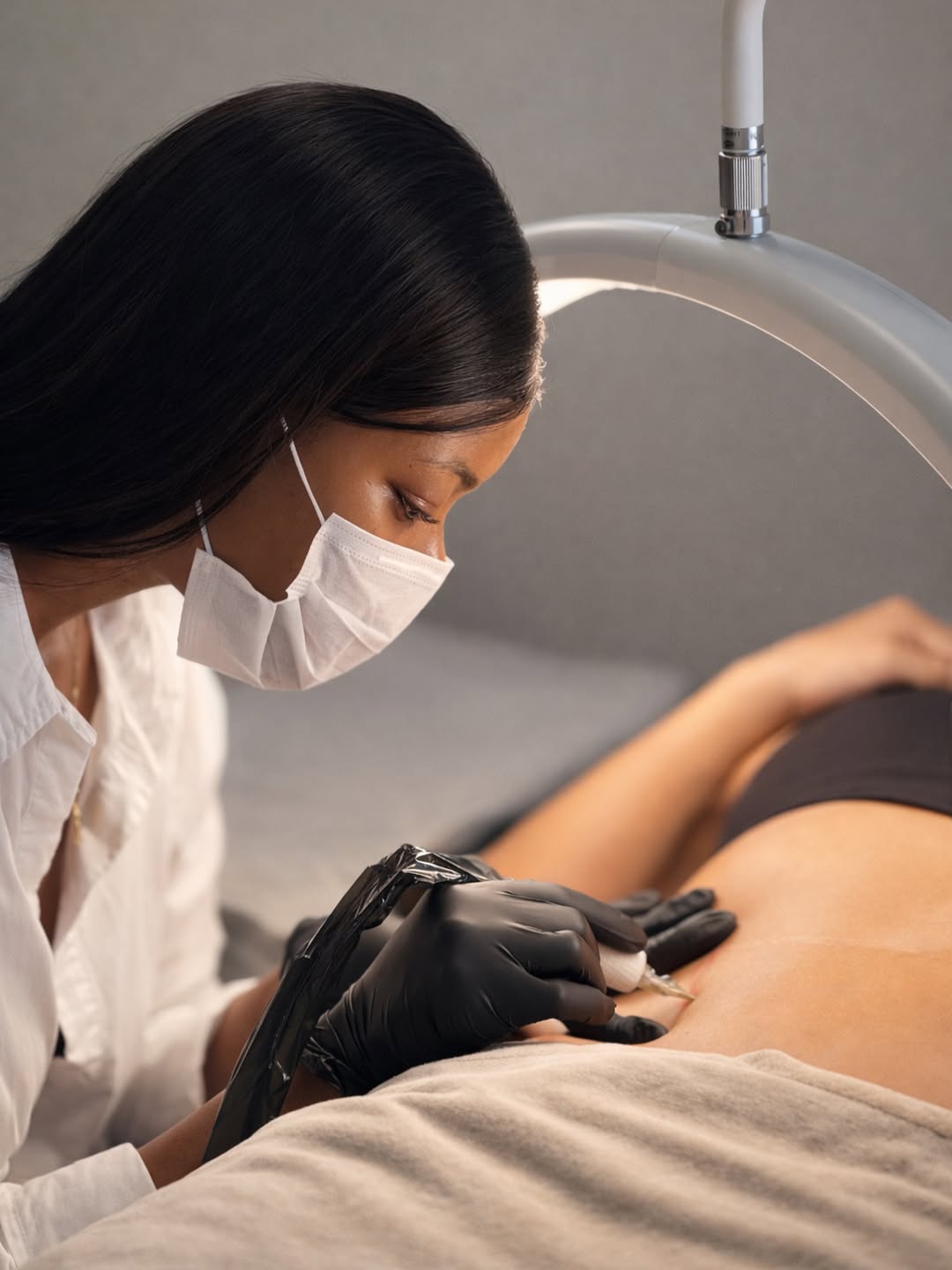
There's a particular kind of tired that comes from managing how other people see your skin. Choosing the swimsuit with more coverage. Angling your arm in photos. Reaching for a cardigan in the middle of a Johannesburg summer because a caesarean scar, a burn, an old surgery, or stretch marks feel like the first thing anyone will notice.
If any of that sounds familiar, you're not vain, and you're not alone. You're one of thousands of people quietly searching things like "how to hide stretch marks" or "can you cover a scar permanently" at 11pm. This article is the answer we wish more of those searches led to — a straightforward explanation of scar camouflage, the paramedical treatment that's changing how people feel about their skin.
First, what is scar camouflage?
Scar camouflage — also called paramedical tattooing or skin tone tattooing — is a specialised medical tattooing technique that deposits custom-blended pigment into a healed scar or stretch mark, matching it to your surrounding skin tone.
Unlike decorative tattooing, the goal isn't to add something to your skin. It's to make something disappear into it. A skilled practitioner mixes pigments the way an artist mixes paint — accounting for your undertones, how your skin behaves in the sun, and how the pigment will settle as it heals — so the treated area blends seamlessly with the skin around it.
Why creams don't work — and camouflage does
Here's the honest truth the skincare aisle won't tell you: once a scar or stretch mark has matured and turned white or silvery, it has lost its pigment-producing cells. No topical product can bring melanin back to tissue that no longer produces it. That's why the oils and creams feel like they're doing nothing — because on mature scars, they largely are.
Camouflage tattooing works precisely because it doesn't ask your skin to do something it can't. Instead of trying to trigger repigmentation, it places the correct colour exactly where it's missing. It's not a trick of light or a temporary cover — it's pigment living in the skin itself.
Who is a good candidate?
Scar camouflage works best on scars and marks that are:
- Fully healed — generally at least 9–12 months old, with no redness or active change
- Lighter than your surrounding skin — white, silvery, or hypopigmented marks respond beautifully
- Flat or relatively smooth — heavily raised (keloid) scars need a different approach first
That covers a remarkable range of real life: caesarean and surgical scars, stretch marks from pregnancy or growth, burn scars, self-harm scars, scars from accidents or acne, and skin left uneven after injury. Each carries its own story — and as we often say in the studio, some scars are from becoming stronger, and some are from becoming softer. Camouflage isn't about erasing that story. It's about deciding you no longer want it to be the first thing the world reads.
If your scar is darker than your skin, raised, or very new, don't lose heart — it simply means camouflage may not be the right first step. Treatments like medical skin peels or skin rejuvenation can often prepare the skin, and an honest consultation will tell you exactly where you stand. If we don't believe we can give you a beautiful result, we'll tell you.
What actually happens during treatment
1. Consultation & colour matching
Everything starts with a one-on-one assessment. We examine the scar, take your medical history, and blend a custom pigment against your skin in natural light. This step is where the artistry lives — a poor colour match is the difference between a scar that vanishes and one that's simply been recoloured.
2. The session
A topical numbing agent is applied, then pigment is layered into the scar tissue with a fine tattoo device. Most clients describe the sensation as mild discomfort rather than pain — scar tissue often has reduced sensation. Sessions typically take one to two hours depending on the area.
3. Healing & reveal
The treated area will look darker and slightly inflamed for the first week — this is normal. As the skin heals over four to six weeks, the pigment softens and settles into its true, matched tone. Most clients need one to three sessions for a fully blended result, and you'll receive clear aftercare guidance at every step of the process.
The question everyone asks: "Will it look natural?"
When done well — yes. That's the entire point. A properly camouflaged scar doesn't look "covered"; it looks like ordinary skin, because the pigment has been matched to your skin, not a shade off a chart. The realistic expectation to hold is significant blending, not surgical erasure: a scar that once announced itself from across the room becomes something you have to search for.
And that difference is bigger than it sounds. Clients tell us it's the first summer in years they didn't think about their arms. The first time they wore a costume to the beach without a wrap. The moment they stopped explaining their own body to strangers.
Quick answers to common questions
Does it hurt?
Mild discomfort at most. Numbing cream is applied first, and scar tissue is often less sensitive than normal skin.
How long does it last?
Results are long-lasting. Because your natural skin tone shifts subtly over the years, an occasional touch-up may be recommended to keep the blend perfect.
Can stretch marks really be treated?
Yes — mature, light-coloured stretch marks are one of the most rewarding areas to camouflage.
How much does it cost?
It depends entirely on the size and nature of the area, which is why we quote after a consultation rather than guessing. The consultation itself is a conversation, not a commitment.
Your skin has carried the story long enough
A scar tells you where you've been. It doesn't get to decide how you feel walking into a room. If you've spent years covering, angling, and explaining, know that there is a safe, medically-grounded option — and it starts with a simple conversation in a space built on care.
Curious if you're a candidate?
Book a no-pressure scar consultation at Gemini Health & Medical Aesthetics in Johannesburg. We'll assess your skin honestly and design a plan built around you.
Book an Appointment